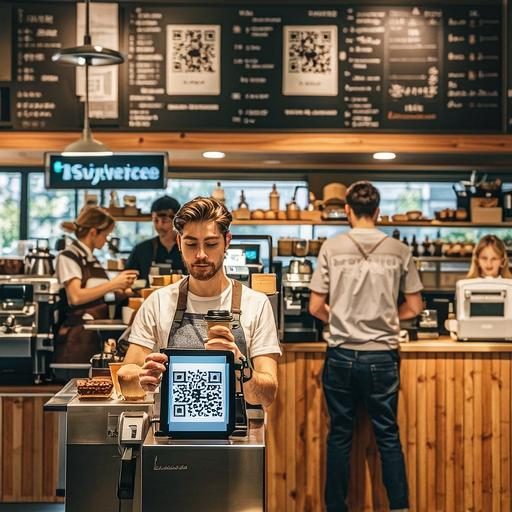
QR Codes: The Silent Revolution Reshaping Daily Life Across the West
Once a niche technical tool, QR (Quick Response) codes have quietly woven themselves into the fabric of daily life across Europe and America. Their journey from industrial tracking to ubiquitous consumer interface is a testament to both technological adaptation and shifting cultural norms, accelerated significantly by recent global events. Today, businesses and individuals alike rely on QR code generator tools to create seamless digital connections—whether for marketing, payments, or information sharing.
The Pandemic’s Unexpected Catalyst
The pandemic served as an unexpected catalyst for QR code adoption. Overnight, QR codes became the cornerstone of contactless interaction. Restaurants across major metropolitan areas rapidly replaced physical menus with QR codes scanned from tableside placards, a trend that persists due to its convenience and cost-effectiveness. Many establishments now use a free dynamic QR code generator to update their digital menus in real time without reprinting materials.
Retail stores prominently displayed codes linking to product details, reviews, or online purchasing options, blending the physical and digital shopping experience. Museums and art galleries adopted them extensively for self-guided tours, offering rich multimedia content at the visitor's fingertips without crowded audio guide stations. This widespread adoption fostered a level of user familiarity that previous attempts had struggled to achieve.
Beyond Hospitality: Streamlining Essential Services
Beyond hospitality and retail, QR codes are streamlining essential services. Public transit networks in numerous cities utilize them for ticket validation and journey planning, simplifying commutes. Event management has been transformed; digital tickets accessed via QR codes are now standard at concerts and sporting arenas, drastically reducing queues and forgery risks.
The healthcare sector increasingly leverages them for patient registration and accessing medical records securely, while educational institutions use them for campus navigation, resource access, and event check-ins. Some organizations even create a custom QR code with logo to reinforce branding while ensuring quick access to important links.
Security Concerns and Future InnovationsHowever, the Western adoption curve isn't without friction. Deep-seated concerns about data privacy and security remain significant hurdles. Consumers are often wary of where scanned data travels and how it's used. Phishing scams ("quishing") exploiting QR codes add to these anxieties. Consequently, transparency from businesses deploying these codes is paramount.
Clear communication about data handling, adherence to strict privacy regulations like the General Data Protection Regulation, and robust security measures are non-negotiable for building trust. The future evolution of QR codes in Western markets will likely focus on enhancing security features—perhaps integrating visual cues or biometric verification—and exploring immersive experiences linking to augmented reality.
For instance, businesses can use a QR code for WhatsApp link to facilitate direct customer communication while maintaining transparency about data usage. As QR technology evolves, its silent revolution continues, fundamentally changing how we access information and interact with the world around us.
Whether you need a free dynamic QR code generator, a custom QR code with logo, or a QR code for WhatsApp link, tools like QR Spider’s QR code generator make it easy to integrate this technology into your daily operations. The future is contactless, and QR codes are leading the way.