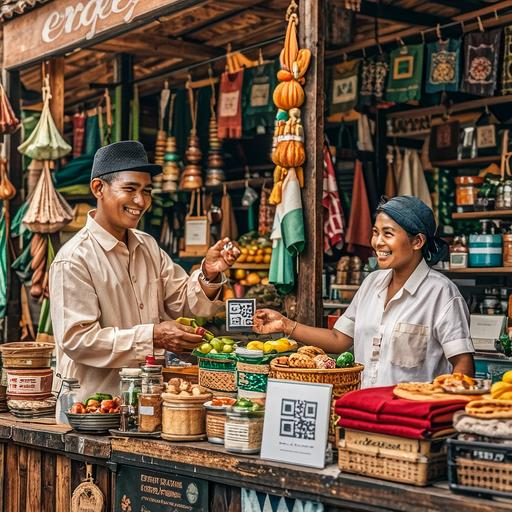
QR Codes Powering Europe's and America's Energy Evolution
The unassuming QR code generator, once merely a bridge to menus or websites, is experiencing a profound transformation within the energy sectors across Europe and America. As these regions intensify their focus on sustainability, grid modernization, and consumer empowerment, QR codes are emerging as surprisingly versatile and powerful tools. Their ability to bridge the physical and digital worlds with a simple scan is unlocking new levels of efficiency, engagement, and information access crucial for the energy transition.
Enhancing Consumer Interaction and Energy Management
One prominent application lies in enhancing consumer interaction and energy management. In European cities and American suburbs alike, QR codes are appearing on smart meters, energy bills, and even home appliances. Scanning provides homeowners with instant access to detailed consumption breakdowns, personalized energy-saving tips, and real-time tariff information.
This empowers consumers to make informed decisions, shift usage to off-peak times to save money, and understand their environmental footprint more tangibly. Utilities leverage this interaction to offer targeted efficiency programs and foster better customer relationships.
Streamlining EV Charging Infrastructure
Furthermore, QR codes are instrumental in the booming electric vehicle (EV) charging infrastructure. Scanning a free dynamic QR code generator on a public charging station initiates the session, provides payment options, displays status updates, and often links to maps showing nearby available chargers, significantly simplifying the EV ownership experience across both continents.
Optimizing Field Operations and Maintenance
Beyond consumer-facing roles, QR codes are streamlining critical field operations and maintenance. Energy infrastructure, from vast solar farms in Southern Europe to wind turbines dotting the American Midwest and complex transmission substations, requires meticulous upkeep.
Technicians equipped with mobile devices can scan custom QR code with logo attached to equipment. This instantly pulls up the asset's complete digital history – maintenance schedules, repair logs, operational manuals, safety protocols, and real-time performance data. This eliminates cumbersome paper trails, minimizes errors, accelerates troubleshooting, and ensures procedures are followed precisely, enhancing both safety and operational efficiency.
Facilitating Commissioning and Secure Communications
QR codes also simplify equipment commissioning and inventory management across sprawling energy sites. The inherent security aspect, where codes can be updated dynamically or require authentication to access sensitive information, adds a layer of protection compared to static labels.
For instance, a QR code for WhatsApp link can be used to facilitate instant communication between field technicians and control centers, ensuring rapid response times during critical operations.
The Future of QR Codes in Energy
The integration of QR codes within Europe's and America's energy landscapes signifies a shift towards interconnected, data-driven systems. They act as ubiquitous digital keys, democratizing access to energy information for consumers while simultaneously providing technicians and grid operators with streamlined, secure access to vital operational data.
As the energy sector continues its rapid digitalization journey, the humble QR code generator for free, with its simplicity, versatility, and low cost, is proving to be an indispensable tool in building smarter, more resilient, and user-centric energy networks. This quiet technology is playing a surprisingly loud role in powering a sustainable future.
For businesses and individuals looking to harness the power of QR codes, tools like Generator Kode QR offer seamless solutions to create, customize, and manage QR codes efficiently. Whether you need a free dynamic QR code generator, a custom QR code with logo, or a QR code for WhatsApp link, the right platform can simplify your digital transition.