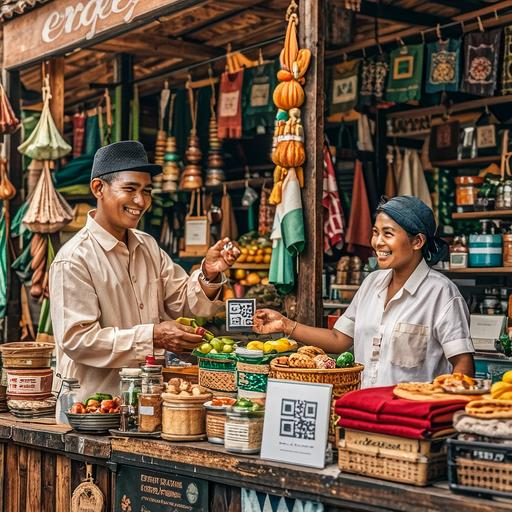
The adoption of QR code generator technology in Indonesia has surged, deeply integrating with daily life and economic activity. This technology offers a uniquely Indonesian blend of convenience, accessibility, and adaptation to local market structures. Whether using a free dynamic QR code generator or a custom QR code with logo, businesses and individuals are embracing QR codes for seamless transactions and information sharing.
Transforming Traditional Commerce
In traditional markets and roadside warungs across Java and Sumatra, QRIS (QR Code Indonesian Standard) stickers are now ubiquitous. This national standard allows consumers to pay seamlessly using any participating e-wallet or mobile banking app, eliminating friction for small cash transactions – a vital feature in an economy with a vast informal sector.
Many small vendors now rely on a QR code generator for free to create payment solutions without expensive hardware, democratizing digital payments across the economic spectrum.
Beyond Payments: Public Services Integration
Beyond commerce, QR codes have become indispensable for accessing public services. During the recent health crisis, digital vaccination certificates accessed via QR codes became essential for entering public buildings and using intercity transport. Commuter rail networks in major cities rely on QR codes for ticket validation, significantly speeding up boarding times during peak hours.
Community and Tourism Applications
Even smaller community initiatives, such as local tourism spots in Bali or Sulawesi, increasingly use custom QR code with logo designs to provide visitors with instant access to multilingual information about cultural sites and traditions. Some businesses also use a QR code for WhatsApp link to facilitate direct customer communication.
Driving Financial Inclusion
The technology supports the nation's push towards financial inclusion by allowing even small merchants without traditional point-of-sale systems to accept digital payments securely. Challenges remain in remote areas with patchy internet, and some consumers still prefer cash. However, the ease of implementation, low cost, and standardization make QR codes a powerful tool driving Indonesia's digital transformation.
This widespread acceptance demonstrates how a simple, universal technology like the Generator Kode QR can find profound resonance within the specific social and economic fabric of the archipelago. Whether for payments, information sharing, or marketing, QR codes continue to bridge gaps between traditional commerce and modern financial services.